PM SVANidhi (Prime Minister Street Vendor’s AtmaNirbhar Nidhi) is the central government scheme that gives collateral-free working capital loans to street vendors. After its restructuring in 2025, PM SVANidhi now runs until March 2030 with bigger loan amounts, a UPI-linked RuPay credit card and digital payment cashback. This 2026 guide explains PM SVANidhi eligibility, loan tranches, benefits, documents, how to apply online and offline, and tips for street vendors in Kerala.
PM SVANidhi 2026: Key Highlights
| Item | Details |
|---|---|
| Launched | 1 June 2020 |
| Lending period | Extended up to 31 March 2030 |
| Total outlay (restructured scheme) | ₹7,332 crore |
| 1st loan | Up to ₹15,000 (raised from ₹10,000) |
| 2nd loan | Up to ₹25,000 (raised from ₹20,000) |
| 3rd loan | Up to ₹50,000 |
| Extra benefit | UPI-linked RuPay credit card after repaying the 2nd loan |
| Digital cashback | Up to ₹1,600 on retail and wholesale digital transactions |
| Target | 1.15 crore beneficiaries, including 50 lakh new vendors |
| Ministries | Ministry of Housing and Urban Affairs and Department of Financial Services |
What Is PM SVANidhi?
PM SVANidhi was launched during the COVID-19 pandemic to help street vendors restart their businesses. Vendors selling vegetables, fruits, snacks, tea, clothes, flowers, footwear and other goods on streets and markets often depend on moneylenders who charge very high interest. PM SVANidhi offers small, collateral-free loans through banks and financial institutions, along with incentives for timely repayment and digital payments.
By mid-2025, more than 96 lakh loans worth over ₹13,797 crore had been disbursed to more than 68 lakh vendors. In August 2025, the Union Cabinet approved a restructured PM SVANidhi with higher loan limits, extension to 2030 and coverage beyond statutory towns to census towns and peri-urban areas in a graded manner.
PM SVANidhi Loan Tranches Explained
- First loan – up to ₹15,000: For working capital, repayable in monthly instalments over about a year.
- Second loan – up to ₹25,000: Available after repaying the first loan on time.
- Third loan – up to ₹50,000: Available after repaying the second loan.
- RuPay credit card: Vendors who repay the second loan can get a UPI-linked RuPay credit card for quick credit for business and personal needs.
This step-by-step approach rewards discipline. Vendors who repay on time build a credit history, which helps them access larger formal loans in future.
Who Is Eligible for PM SVANidhi?
- Street vendors engaged in vending in urban areas, and in the restructured scheme, in census towns and peri-urban areas as rolled out.
- Vendors with a Certificate of Vending or Identity Card issued by the Urban Local Body (ULB).
- Vendors identified in the ULB survey but without a certificate can get a provisional certificate.
- Vendors left out of the survey can apply with a Letter of Recommendation (LoR) from the ULB or Town Vending Committee.
- Vendors from surrounding areas who sell in urban markets may also be eligible with an LoR.
Eligibility is confirmed by the local body, so contact your municipality or corporation if you are unsure.
Documents Required
- Aadhaar card with a mobile number linked to it
- Certificate of Vending / Identity Card, or Letter of Recommendation from the ULB
- Bank account details (savings account in the vendor’s name)
- Voter ID or other ID proof, if asked
- Passport-size photograph
How to Apply for PM SVANidhi Online
- Visit the official PM SVANidhi portal pmsvanidhi.mohua.gov.in.
- Choose the option to apply for a loan and enter your Aadhaar-linked mobile number.
- Verify with OTP and fill in your personal and vending details.
- Upload the vending certificate or Letter of Recommendation and other documents.
- Select the bank or lending institution where you want the loan.
- Submit the application and note the application number.
- The lender verifies the application and disburses the loan to your bank account once approved.
How to Apply Offline
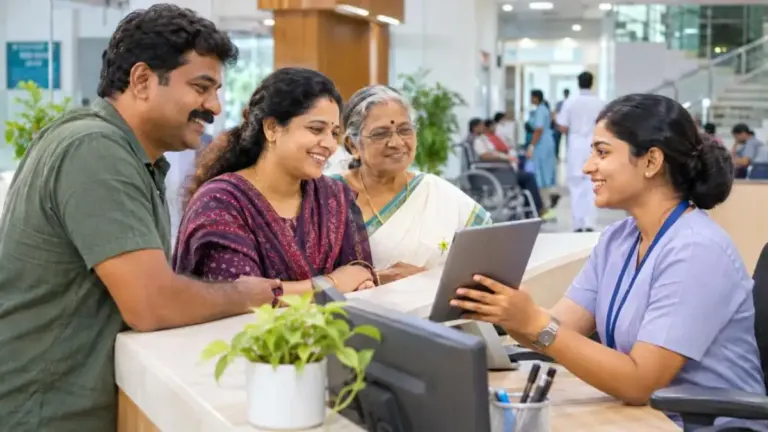
If you are not comfortable applying online, visit a Common Service Centre (CSC) or Akshaya centre in Kerala, your municipality office, or a bank branch. Officials and Kudumbashree resource persons in many urban areas also help vendors with applications. Carry Aadhaar, mobile phone and vending documents.
Benefits of PM SVANidhi
- No collateral: Loans are given without security.
- Higher loan amounts: Up to ₹15,000, ₹25,000 and ₹50,000 in three steps.
- Interest support for timely repayment: The scheme has provided interest subsidy for regular repayment; check current terms with your lender.
- Digital cashback: Up to ₹1,600 for using digital payments in business.
- RuPay credit card: Quick credit access for vendors with a good repayment record.
- Credit history: Helps vendors enter the formal banking system.
- Linkage to welfare schemes: Vendors and families can be connected with other government schemes through convergence programmes.
PM SVANidhi and Digital Payments
One major aim of PM SVANidhi is to make street vendors part of the digital economy. Vendors get QR codes and are encouraged to accept UPI payments. Every digital transaction can earn cashback within the scheme limits, and the transaction history helps banks assess creditworthiness. For vendors, digital payments also reduce the risk of handling cash and make it easier to track daily income.
How to Check PM SVANidhi Application Status
- Visit the PM SVANidhi portal.
- Choose “Know Your Status” or the application status option.
- Enter your application number or mobile number and verify with OTP.
- View the current stage: submitted, approved by ULB, sanctioned by bank or disbursed.
PM SVANidhi for Street Vendors in Kerala
Kerala has thousands of street vendors in cities like Thiruvananthapuram, Kochi, Kozhikode, Thrissur and Kollam, as well as in smaller municipalities. Vendors selling fish, vegetables, fruits, snacks, lottery tickets, clothes and household items can benefit. Municipal corporations and municipalities in Kerala conduct vendor surveys and issue identity cards under the Street Vendors Act. Kudumbashree, through the National Urban Livelihoods Mission, often supports vendors with registration and loan applications. If you are a vendor in Kerala and do not yet have an ID card, approach your local body’s urban poverty alleviation or NULM cell.
Street Vendors Act and Your Rights
The Street Vendors (Protection of Livelihood and Regulation of Street Vending) Act, 2014 protects the rights of street vendors and regulates vending in urban areas. Under the Act, local bodies conduct surveys, form Town Vending Committees and issue certificates of vending. A vendor with a certificate has the right to carry on vending in the designated area as per the vending plan. Knowing these rights helps vendors deal confidently with authorities and access schemes like loans and social security.
SVANidhi se Samriddhi: Linking Vendors to Welfare Schemes
Under the “SVANidhi se Samriddhi” component, the government profiles vendor families and links them to other welfare schemes for which they are eligible. These can include insurance schemes like PMJJBY and PMSBY, pension schemes like Atal Pension Yojana, ration card portability, maternity benefits, construction worker registration and more. Ask your local body or Kudumbashree contact whether your family has been profiled and which benefits you can apply for.
How to Use the Loan Wisely
- Buy stock in bulk: Purchasing at wholesale rates improves profit margins.
- Upgrade equipment: A better cart, weighing scale, stove or storage box can increase sales and reduce waste.
- Improve hygiene and display: Clean, attractive stalls attract more customers.
- Avoid personal spending: Use the money for business purposes so you can repay easily.
- Keep a buffer: Save a small amount from daily sales for EMI payments.
Financial Literacy Tips for Vendors
Running a small business successfully requires basic money management. Separate business and household money as much as possible. Record daily sales and expenses in a notebook or a simple mobile app. Understand your profit margin on each item. Open a recurring deposit or small savings account to build a cushion for slow seasons and emergencies. Learn to use UPI safely: never share your PIN or OTP, and verify payment notifications before handing over goods. These habits make it easier to repay loans and grow steadily.
Insurance and Social Security for Vendors
Street vending involves risks like illness, accidents and loss of goods. Low-cost government schemes can provide basic protection. PMJJBY offers life cover, PMSBY offers accident cover, and Atal Pension Yojana gives a guaranteed pension in old age. Ayushman Bharat and Kerala’s KASP provide health coverage for eligible families. Enrol in these schemes through your bank or local facilitation centre to protect your family alongside your business.
PM SVANidhi vs Moneylenders
| Point | PM SVANidhi loan | Informal moneylender |
|---|---|---|
| Interest | Bank rates with incentives for timely repayment | Often very high daily or weekly interest |
| Collateral | Not required | Sometimes gold or documents demanded |
| Credit history | Builds formal credit record | No credit record |
| Legal protection | Regulated lenders | Risk of harassment |
| Next loan | Larger loans on good repayment | No structured growth |
Moving from moneylenders to formal credit is one of the biggest benefits for vendors. Even small savings on interest add up to a meaningful amount over a year.
Role of Banks and Lending Institutions
Scheduled commercial banks, regional rural banks, small finance banks, cooperative banks, NBFCs, microfinance institutions and SHG banks can lend under the scheme as per guidelines. Banks verify the application, sanction the loan and disburse it to the vendor’s account. Some lenders also help vendors set up UPI QR codes. If one lender delays, you can contact the local body or the scheme helpline listed on the official portal.
Grievance Redressal
If your application is pending for a long time, rejected without explanation or you face problems with the lender, raise a grievance through the official portal or contact your Urban Local Body. Keep your application number and documents ready. You can also approach the lead district manager or bank branch manager for assistance.

Checklist Before Applying
- Vending certificate, ID card or Letter of Recommendation ready.
- Aadhaar linked to your active mobile number.
- Savings bank account in your name, Aadhaar-seeded.
- Clear plan for how you will use the loan.
- Monthly budget showing you can pay the EMI.
- UPI app installed and QR code set up for business payments.
Following this checklist increases the chances of quick approval and smooth repayment.
Repayment Tips
- Pay instalments on time to remain eligible for the next, larger loan.
- Keep enough balance in your bank account on the EMI date.
- Use UPI for business receipts so that money flows into your account automatically.
- Keep a simple record of daily sales and expenses.
- If you face difficulty, speak to the bank early instead of missing payments.
Common Reasons for Rejection
| Reason | Solution |
|---|---|
| No vending certificate or LoR | Get an ID card or Letter of Recommendation from the ULB |
| Mobile not linked to Aadhaar | Update your mobile number at an Aadhaar centre |
| Bank account issues | Use an active savings account in your own name |
| Previous loan default | Clear dues before applying for the next tranche |
| Incorrect details | Check name, address and vending location carefully |

Real-Life Example
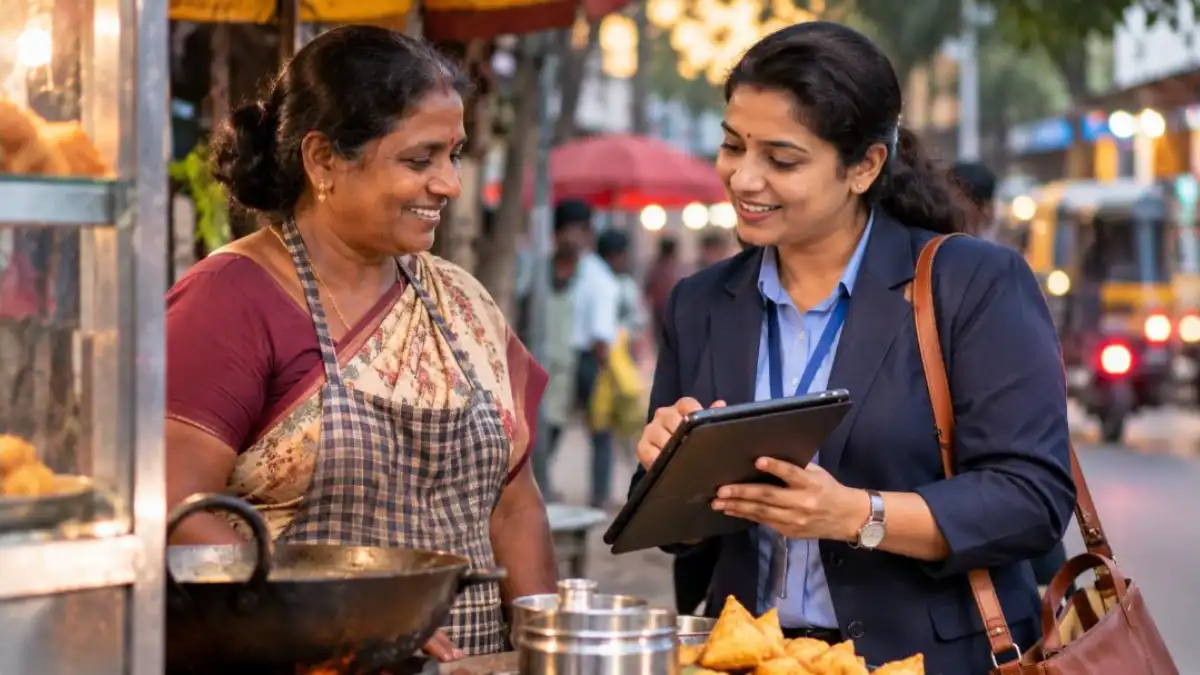
Shaji sells tea and snacks from a small cart near a bus stand in Kollam. He received a vending ID card from the municipality and applied for PM SVANidhi with help from a Kudumbashree resource person. He used the first loan to buy a new gas stove and utensils. He repaid on time through monthly instalments, using UPI payments from customers. After repaying, he became eligible for a larger second loan, which he used to expand his menu. Today he accepts most payments digitally and has a growing credit history with his bank.
PM SVANidhi and Other Government Schemes for Vendors
PM SVANidhi works best when combined with other government schemes. Many street vendors also need a bank account, insurance and a pension plan.
- Jan Dhan account: If you do not have a bank account, open a zero-balance Jan Dhan account first. The PM SVANidhi loan and subsidy are credited to your account.
- PAN and Aadhaar link: Keep your PAN and Aadhaar linked so that bank KYC is smooth.
- Health cover: Check if your family is eligible for the Ayushman Bharat card for free hospital treatment.
- Retirement savings: Once income stabilises, consider a small monthly contribution to an NPS account.
How PM SVANidhi Builds Your Credit History
Most street vendors have never taken a formal bank loan. That means they have no credit score. PM SVANidhi changes this.
When you take the first loan and repay it on time, the bank reports it to credit bureaus. Your repayment record becomes the start of your credit history. After the second and third loans, you have a proven track record.
A good credit history helps you later when you need a bigger business loan, a two-wheeler loan or a home loan. In this way, PM SVANidhi is not just a small loan but a stepping stone into the formal banking system.
Smart Ways to Use the PM SVANidhi Loan
- Buy stock in bulk at wholesale rates to increase your margin.
- Upgrade your cart, stall or weighing scale.
- Buy a better stove or cooking equipment for food stalls.
- Get a QR code and start accepting UPI payments to earn cashback.
- Keep a small part as working capital for slow days.
Avoid using the PM SVANidhi loan for personal spending. Every rupee invested in the business should help you earn the money for the monthly EMI.
Repayment Tips for PM SVANidhi Borrowers
- Set aside a small amount from daily sales into a separate box or account for the EMI.
- Choose an EMI date just after your busiest days.
- Pay through UPI to keep a digital record.
- If you face trouble, talk to the bank early instead of skipping payments.
- Repay early if possible; prepayment has no penalty under the scheme.
Role of Urban Local Bodies
Municipal corporations and municipalities play a key role in PM SVANidhi. They identify street vendors, issue the Certificate of Vending or Identity Card, and issue a Letter of Recommendation (LoR) for vendors left out of surveys.
If you are a vendor without a vending certificate, visit your municipal office and ask for the LoR process under PM SVANidhi. Community resource persons and town vending committees can also help.
Frequently Asked Questions
How much loan can I get under PM SVANidhi?
Up to ₹15,000 in the first loan, ₹25,000 in the second and ₹50,000 in the third, after timely repayment of each.
Is any collateral needed?
No. PM SVANidhi loans are collateral-free.
Till when is PM SVANidhi available?
The restructured scheme extends the lending period up to 31 March 2030.
Can I apply without a vending certificate?
Yes, with a Letter of Recommendation from the Urban Local Body or Town Vending Committee.
What is the RuPay credit card benefit?
Vendors who repay the second loan can get a UPI-linked RuPay credit card for immediate credit needs.
Conclusion
PM SVANidhi gives street vendors easy, collateral-free credit to grow their businesses, along with digital cashback and a path to larger loans and a RuPay credit card. With the scheme extended to 2030 and loan limits raised, more vendors can benefit. Get your vending certificate or recommendation letter, keep Aadhaar and bank details ready, and apply online or through a CSC, Akshaya centre or your local body.
Note: Scheme details are based on the Union Cabinet’s 2025 decision. Check the official PM SVANidhi portal or your bank for the latest terms.