The Mahatma Gandhi National Rural Employment Guarantee Act (MGNREGA) guarantees up to 100 days of wage employment in a financial year to every rural household whose adult members are willing to do unskilled manual work. To get work, your family first needs an MGNREGA job card. In Kerala, the scheme is popularly called Thozhilurappu.
This guide explains the MGNREGA job card in easy steps: eligibility, how to apply at the Gram Panchayat, documents, how to demand work, wage payment, how to check your job card online and your rights under the Act.
MGNREGA Job Card: Key Highlights
| Feature | Details |
|---|---|
| Law | Mahatma Gandhi National Rural Employment Guarantee Act, 2005 |
| Guarantee | Up to 100 days of unskilled wage work per rural household per financial year |
| Who issues job card | Gram Panchayat |
| Cost of job card | Free |
| Work within | 15 days of demand (otherwise unemployment allowance as per rules) |
| Wage payment | Directly to bank or post office account |
| Official portal | nrega.nic.in |
What Is an MGNREGA Job Card?
An MGNREGA job card is a document issued to a rural household that lists all adult members willing to work under the scheme. It carries a unique job card number and photographs of members. It is the key document that entitles your family to demand work and receive wages. The job card also records the days worked and wages paid, bringing transparency.
Who Is Eligible?
- The household must live in a rural area (Gram Panchayat).
- Members must be adults (18 years or above).
- Members must be willing to do unskilled manual work.
- There is no income limit; any rural household can register.
Documents Required
- Application in writing or orally to the Gram Panchayat (Form/registration).
- Photographs of adult members.
- Aadhaar of members (for verification and direct payment).
- Bank or post office account details.
- Proof of residence in the Gram Panchayat, such as ration card or voter ID.
How to Apply for an MGNREGA Job Card
- Visit your Gram Panchayat office.
- Submit an application for registration with names, ages and details of adult members.
- Attach photographs, Aadhaar and bank details.
- The Panchayat verifies the household’s residence and details.
- The MGNREGA job card should be issued free of cost, generally within 15 days of application.
- Keep the job card safely with the household; it should not be held by contractors or others.
How to Demand Work
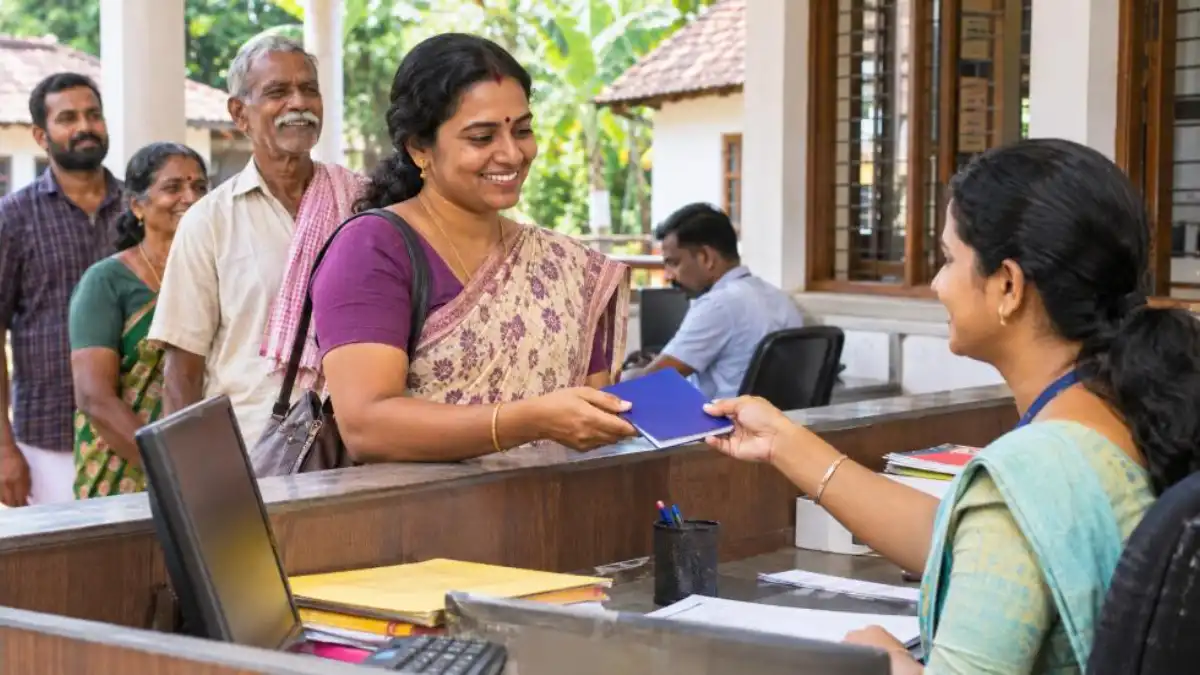
- Submit a written application for work to the Gram Panchayat, mentioning the job card number, the period and number of days you need work.
- Get a dated receipt for your work demand; this is your right.
- Work should be provided within 15 days of the application, usually within 5 km of your home.
- If work is given beyond 5 km, extra wages for travel and living expenses are payable as per rules.
- If work is not provided within 15 days, you may be entitled to an unemployment allowance as per the state’s rules.
Types of Work Under MGNREGA
- Water conservation: ponds, check dams, canals.
- Land development and soil conservation.
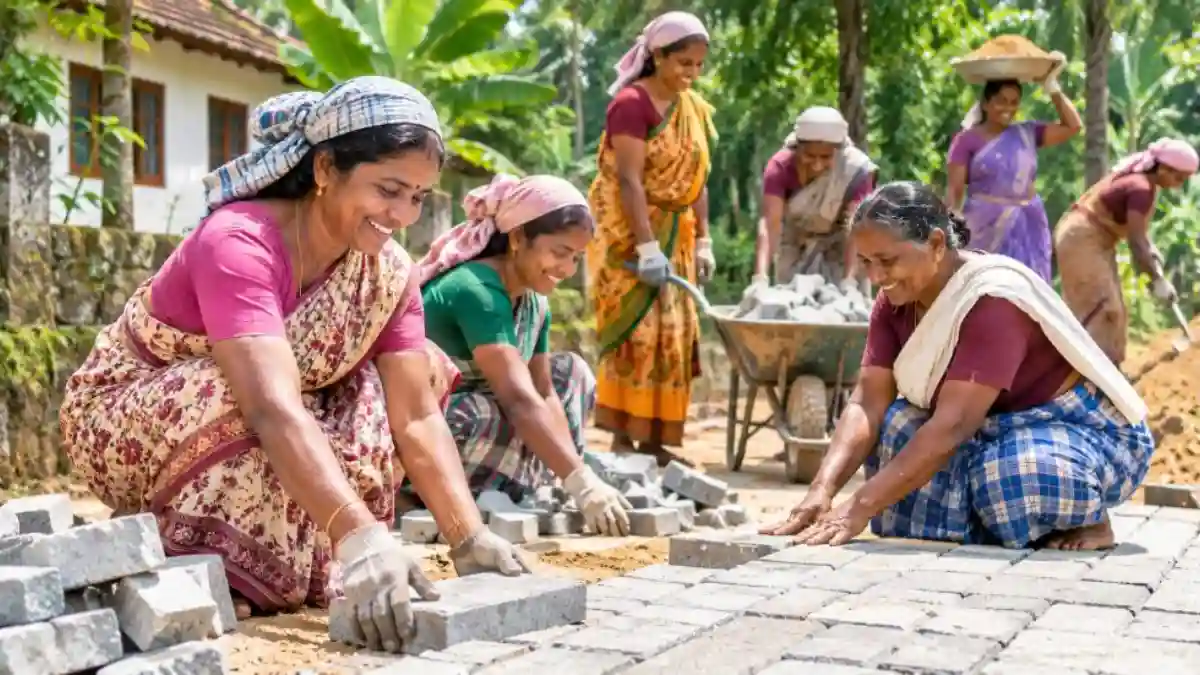
- Rural roads and connectivity.
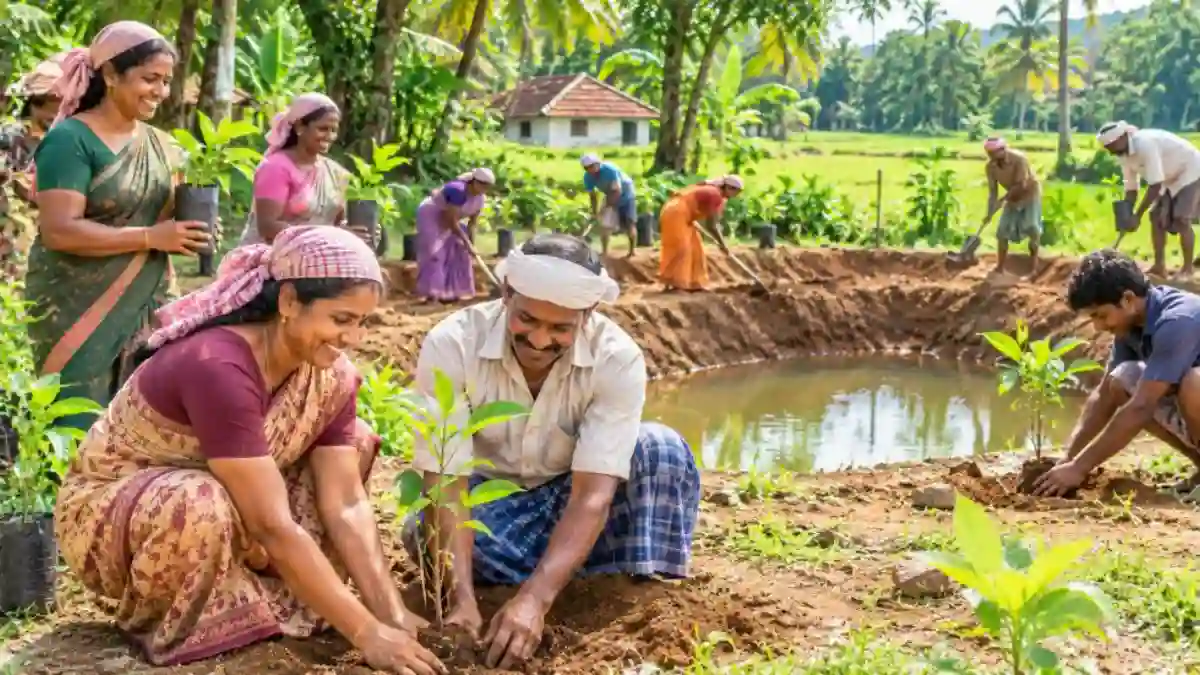
- Afforestation and tree planting.
- Works on land of SC/ST and small farmers.
- Construction of cattle sheds, farm ponds and other individual assets for eligible households.
Wages and Payment
Wage rates are notified state-wise by the Central Government and revised every financial year. Wages are paid directly into the worker’s bank or post office account, usually within 15 days of the end of the work week (muster roll closure). Delays beyond the set time may entitle workers to compensation as per the Act. Check the notified rate for your state on the official MGNREGA website.
How to Check MGNREGA Job Card Online
- Visit the official MGNREGA portal.
- Go to the Gram Panchayat reports or job card section.
- Select financial year, state, district, block and Gram Panchayat.
- Open the job card list and find your name or job card number.
- Click to view details of members, days worked and payments.
You can also use the official NREGA mobile apps and check with the Panchayat’s MGNREGA staff.
Worksite Facilities
The Act provides for basic facilities at worksites, such as drinking water, shade, first aid and crèche facilities where a certain number of children below six are present. Workers have the right to see the muster roll and complain about irregularities.
Your Rights Under MGNREGA
- Right to a free job card.
- Right to demand work and get a dated receipt.
- Right to work within 15 days.
- Right to unemployment allowance if work is not provided, as per rules.
- Right to wages within the prescribed time.
- Right to worksite facilities.
- Right to social audit and grievance redressal.
MGNREGA Job Card in Kerala (Thozhilurappu)
Kerala implements MGNREGA through Gram Panchayats with strong participation of women and Kudumbashree networks. Many workers use their MGNREGA job card to take up work like canal cleaning, pond renovation, coir geotextile-based soil conservation, afforestation and land development. The scheme provides an important income source for elderly women and rural families, especially between farming seasons.
In Kerala, Mates (worksite supervisors) are often women from the community. They maintain attendance and coordinate work. Workers should check that their attendance is marked correctly every day and that their MGNREGA job card entries match the days worked.
How to Add or Remove Members in a Job Card
- Adding a member: When a family member turns 18 or joins the household (for example, after marriage), apply to the Gram Panchayat with proof of age, residence and a photograph to add the member.
- Removing a member: If a member moves away or passes away, inform the Panchayat so records stay accurate.
- Splitting households: When families separate into different households, a new MGNREGA job card may be issued after verification.
Lost or Damaged Job Card
If your job card is lost or damaged, apply to the Gram Panchayat for a duplicate. Your job card number and records stay the same in the online system, so you can verify details on the MGNREGA portal.
Aadhaar-Based Payments
Wages under MGNREGA are increasingly paid through Aadhaar-based payment systems. Make sure your Aadhaar is linked and seeded with your bank account and that the account is active. Payment failures often happen due to mismatched names, inactive accounts or wrong IFSC codes. Check with your bank and update details through the Panchayat.
Social Audit
Every Gram Panchayat must conduct social audits of MGNREGA works, where villagers review records, expenses and quality of works in a public meeting (Gram Sabha). Workers with an MGNREGA job card can raise issues such as missing wages, fake entries or poor worksite facilities during these audits.
Common Problems and Solutions
| Problem | Solution |
|---|---|
| Job card not issued | Submit written application and ask for a receipt; follow up with Block Programme Officer |
| Work not given after demand | Keep the dated receipt; ask about unemployment allowance |
| Wages delayed | Check payment status online; contact Panchayat or helpline |
| Name missing in muster roll | Complain to Mate and Panchayat immediately |
| Payment failed | Check Aadhaar seeding and bank account status |
Other Schemes for Rural Workers
MGNREGA workers can also benefit from other government schemes. Open a zero-balance Jan Dhan account for wage payments, register for the Atal Pension Yojana for old-age income, and check if your family is eligible for Karunya Arogya Suraksha Padhathi health cover. Unorganised workers can also register on the e-Shram portal.
Individual Assets for Small Farmers
Besides community works, MGNREGA can support individual assets on the land of eligible households, such as farm ponds, cattle sheds, goat sheds, poultry shelters, compost pits and horticulture plantations. These assets improve farm income over the long term. Ask your Panchayat about including your land in the annual labour budget and shelf of works.
How Work Is Planned
Every year, the Gram Sabha approves a list of works (shelf of projects) and a labour budget based on expected demand. Villagers can suggest works that benefit the community, like clearing drainage, building ponds or improving roads. Taking part in Gram Sabha meetings helps ensure useful work is available when families need it.
Safety at Worksites
- Wear appropriate clothing and footwear.
- Use gloves when handling stones or thorny plants.
- Drink water regularly and rest in shade during hot hours.
- Report injuries immediately; medical treatment and compensation are provided as per rules for accidents at worksites.
Step-by-Step Example
Lakshmi, a 52-year-old woman in a Thrissur village, applied for an MGNREGA job card at her Gram Panchayat with her husband and son as members. She submitted photos, Aadhaar and bank passbook details. Within two weeks the card was issued. When the rainy season ended, she submitted a written work demand and got a dated receipt. She was given work in a pond renovation project near her home. Her wages were credited to her bank account, and she checked the days and payments on the MGNREGA portal using her MGNREGA job card number.
Tips for Workers
- Keep your MGNREGA job card with you, not with contractors or agents.
- Always ask for a dated receipt when you demand work.
- Check attendance in the muster roll at the worksite.
- Note down days worked in your own diary.
- Check wage credits in your bank passbook or SMS alerts.
- Attend Gram Sabha and social audit meetings.
- Report any request for bribes or deductions.
Role of the Gram Panchayat
The Gram Panchayat registers households, issues job cards, receives work demands, plans and executes most works, and maintains records. The Block Programme Officer supervises at the block level, and the District Programme Coordinator oversees the district. Knowing this structure helps you approach the right office when issues arise.
Digital Monitoring
MGNREGA uses technology to improve transparency, such as geotagging of assets, electronic muster rolls and online payment tracking. Mobile attendance systems have been introduced at many worksites. These tools help reduce fake entries and ensure workers get paid for genuine work.
Why MGNREGA Matters
MGNREGA was designed as a safety net for rural India. When crops fail, prices fall or other jobs are unavailable, families can rely on guaranteed work close to home. The scheme has also created millions of community assets, from water bodies to rural roads, improving agriculture and village life. For many women, it is their first independent source of income paid directly into their own bank accounts, strengthening their role in household decisions.
During difficult times such as droughts, floods and economic slowdowns, demand for MGNREGA work rises sharply, showing how important it is for rural livelihoods. Having your job card ready before a crisis ensures you can access work quickly.
Checklist for New Applicants
- Confirm you live in a rural Gram Panchayat area.
- List all adult members willing to work.
- Collect photographs, Aadhaar and bank details of each member.
- Visit the Panchayat and submit the application.
- Collect the receipt and follow up after 15 days.
- Verify details online once the card is issued.
Helpful Contacts
- Gram Panchayat MGNREGA section and overseer.
- Block Programme Officer at the block office.
- District MGNREGA cell.
- National and state grievance helplines listed on the official portal.
Final Thoughts
An MGNREGA job card is more than a piece of paper. It is a legal entitlement that gives rural families the power to demand work and earn wages with dignity. Apply free at your Gram Panchayat, keep the MGNREGA job card safe, demand work in writing and check your records regularly. Encourage neighbours and family members who are not yet registered to apply, especially women, elderly workers and households with irregular income.
Policies, wage rates and procedures can change each financial year, so always confirm the latest rules with your Gram Panchayat or the official MGNREGA website before applying or demanding work. With awareness and active participation, every rural household can make full use of this guarantee to build a more secure future.
Frequently Missed Benefits
Many workers do not know that MGNREGA offers more than daily wages. Households can request individual assets on their own land, women can become Mates and earn slightly higher responsibility roles, and workers can raise concerns at social audits that lead to recovery of misused funds. Persons with disabilities can also register and be given suitable work. Elderly workers may be assigned lighter tasks such as water supply at worksites or childcare at crèches. Ask your Panchayat about these options so that every member of the family can participate according to their ability.
Keeping your job card updated, attending Gram Sabha meetings and staying informed through official channels ensures you never miss work opportunities or payments that are rightfully yours.
Share this guide with families in your village, local self-help groups and Kudumbashree units so that every eligible household can register, demand work on time and receive wages without delay. Awareness is the first step to using the guarantee fully, and a well-informed community can also hold the system accountable for quality work and timely payments throughout the year.
Remember, your MGNREGA job card is free and belongs to your family. Use it wisely and confidently every season.
Stay informed, stay registered and make the most of every working day the scheme offers to your household.
Every day of honest work builds a stronger village and a more secure family.
Frequently Asked Questions
Is the MGNREGA job card free?
Yes. No fee should be charged for registration or the job card.
How many days of work are guaranteed?
Up to 100 days per rural household in a financial year. Some states and special categories may provide additional days as per government decisions.
Can women get MGNREGA work?
Yes. The Act aims for at least one-third of beneficiaries to be women, and women form a large share of workers in Kerala.
Where can I complain about non-payment?
Contact the Gram Panchayat, Block Programme Officer or the MGNREGA grievance helpline, or file a complaint online.
Can urban residents get MGNREGA work?
No. It is for rural areas. Kerala has a separate urban employment scheme (Ayyankali Urban Employment Guarantee Scheme) for urban households.
Conclusion
An MGNREGA job card opens the door to guaranteed wage employment for rural families. Apply free at your Gram Panchayat, keep the card with you, demand work in writing, check your records online and use your rights to timely wages and worksite facilities.