
 by
The Ayushman Vay Vandana Card gives every Indian senior citizen aged 70 years and above free hospital treatment cover of up to ₹5 lakh a year, regardless of income. If your parents or grandparents are 70 or older, this is one of the most valuable health benefits they can get in 2026. This guide explains who is eligible, how the cover works, and five easy steps to apply for the Ayushman Vay Vandana Card on your phone using only Aadhaar.
We also cover what happens if the family already has an Ayushman Bharat card, whether CGHS or private insurance holders can join, how to use the card at a hospital, and the most common problems families face during registration.
What Is the Ayushman Vay Vandana Card?
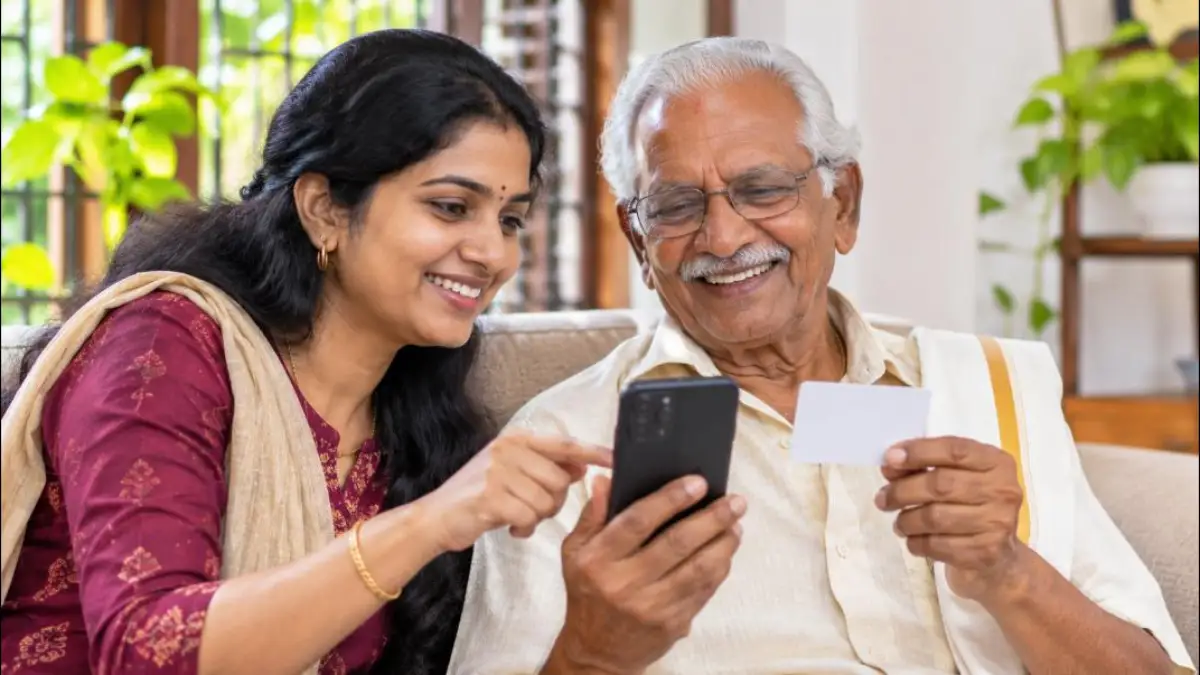
The Ayushman Vay Vandana Card is the health card issued under the expanded Ayushman Bharat Pradhan Mantri Jan Arogya Yojana (AB PM-JAY) for senior citizens aged 70 years and above. The Union Cabinet approved this expansion in September 2024, and enrolment was launched on 29 October 2024. Unlike the original scheme, which was limited to poor and vulnerable families, this card is available to all seniors aged 70+, whether rich or poor.
With the Ayushman Vay Vandana Card, the senior can get cashless treatment for secondary and tertiary hospitalisation at empanelled government and private hospitals across India. The benefit is portable, so a senior from Kerala can use the card in an empanelled hospital in another state.
Key Benefits at a Glance
| Feature | Details |
|---|---|
| Who can apply | All Indian citizens aged 70 years and above |
| Income limit | None |
| Health cover | Up to ₹5 lakh per year on a family basis for seniors 70+ |
| Type of treatment | Cashless hospitalisation at empanelled hospitals |
| Document needed | Aadhaar (with eKYC) |
| Cost to apply | Free |
| Apply through | Ayushman app, official beneficiary portal, empanelled hospitals |
How the ₹5 lakh cover works
The ₹5 lakh cover is on a family basis. If both a husband and wife are above 70, the ₹5 lakh is shared between them. If the senior’s family is already covered under AB PM-JAY, the senior gets an additional top-up cover of up to ₹5 lakh a year just for themselves, which they do not share with younger family members. This makes the Ayushman Vay Vandana Card very useful for joint families.
Ayushman Vay Vandana Card Eligibility
The eligibility rule is simple: age 70 years or more as per Aadhaar. There is no income, caste or occupation test. Here is how the scheme treats seniors who already have other cover.
- Families already under AB PM-JAY: 70+ members get an extra top-up of up to ₹5 lakh for themselves.
- CGHS, ECHS and CAPF beneficiaries: They can choose either their existing scheme or AB PM-JAY, not both.
- Private health insurance holders: Eligible; they can keep their policy and also take the Ayushman Vay Vandana Card.
- ESIC beneficiaries: Eligible to apply.
Age is checked from Aadhaar, so if the date of birth on Aadhaar is wrong, the application may fail. Correct the Aadhaar date of birth first if needed. Our guide on updating Aadhaar details explains the steps.
Documents Required
The main advantage of the Ayushman Vay Vandana Card is minimal paperwork. Keep these ready:
- Aadhaar card of the senior citizen
- Mobile number linked to Aadhaar (for OTP)
- A mobile number for the card account (can be a family member’s)
- A recent photo is captured live in the app; no separate upload is usually needed
How to Apply for Ayushman Vay Vandana Card: 5 Easy Steps
You can apply from home using the official Ayushman app on an Android phone or through the official beneficiary website. The steps below are for the app, which most families find easiest.
Step 1: Download the Ayushman app
Install the official Ayushman app published by the National Health Authority from the Google Play Store. Open it and select Beneficiary as the login type. Enter your mobile number, verify with OTP and complete the captcha.
Step 2: Search for the senior
In the search screen, choose the scheme as PM-JAY, select your state, and select Aadhaar as the search option. Enter the senior’s Aadhaar number. If the senior is 70 or above, the app shows the option for enrolment as a 70+ beneficiary.
Step 3: Complete Aadhaar eKYC
Choose OTP based eKYC (or face authentication if offered). Enter the OTP sent to the Aadhaar linked mobile. The app fetches the name, date of birth, gender and address from Aadhaar automatically.
Step 4: Capture photo and add details
Take a live photo of the senior using the phone camera in good light. Add the mobile number, category if asked, and pin code. If the spouse is also 70+, you can add them as a family member in the same card account.
Step 5: Submit and download
Submit the form. After approval, which is often quick, the Ayushman Vay Vandana Card can be downloaded from the same app or the beneficiary portal as a PDF. Save it on the phone and also keep a printed copy with the senior.
Apply Through the Website or a Hospital
If you do not have an Android phone, you can still get the Ayushman Vay Vandana Card in two other ways.
Official beneficiary portal
Open the official NHA beneficiary portal on a computer, log in as a beneficiary with your mobile OTP, search by Aadhaar and follow the same eKYC and photo steps. The portal works in a browser and the card can be downloaded at the end.
At an empanelled hospital or Ayushman Mitra
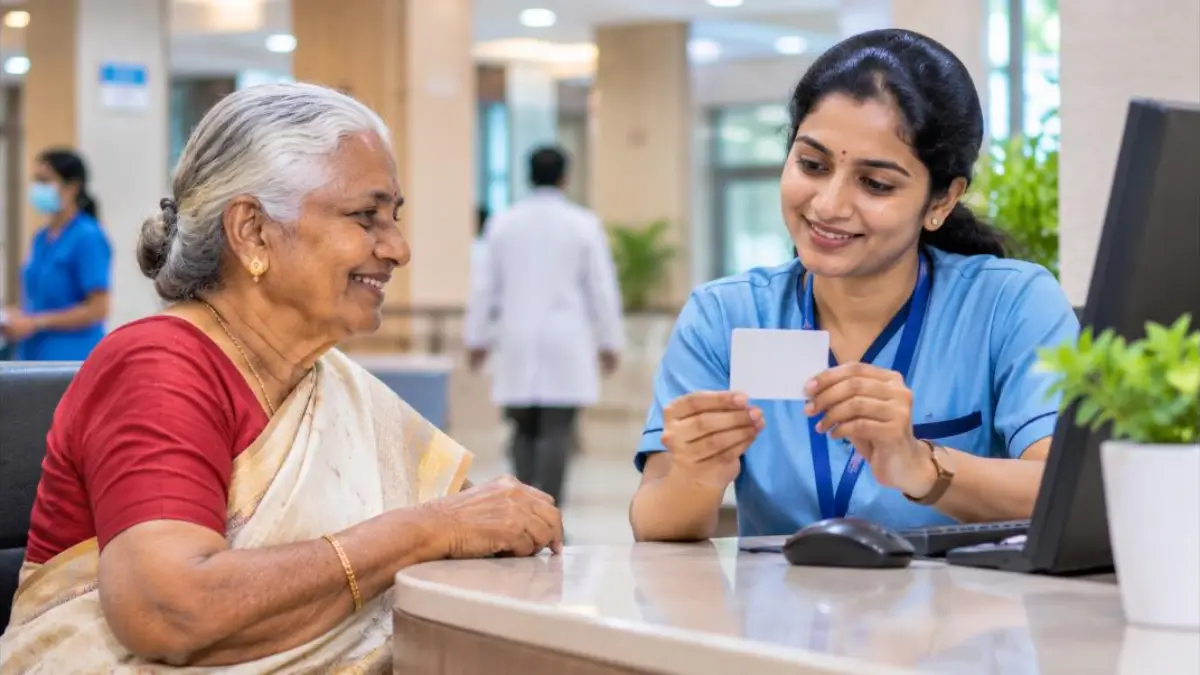
Every empanelled hospital has an Ayushman Mitra help desk. Visit with the senior and the Aadhaar card. The Ayushman Mitra will complete eKYC using fingerprint or OTP and help generate the card. In Kerala, the scheme works together with the state’s KASP network, so government hospitals and many private hospitals can help with enrolment.
Ayushman Vay Vandana Card vs Regular Ayushman Card
| Point | Regular AB PM-JAY card | Ayushman Vay Vandana Card |
|---|---|---|
| Who gets it | Eligible poor and vulnerable families | All citizens aged 70+ |
| Income test | Yes, based on database criteria | No |
| Cover | ₹5 lakh per family per year | ₹5 lakh per year for 70+ seniors (top-up if family already covered) |
| Shared with | Whole family | Only 70+ members |
| Document | Aadhaar / ration card | Aadhaar |
For details on the regular card, read our Ayushman Bharat card apply online guide.
What Treatments Are Covered?
The card follows the AB PM-JAY health benefit packages, which include a large number of procedures across medical and surgical specialities. Commonly used packages by seniors include:
- Cardiology procedures such as angioplasty and bypass surgery
- Cataract and other eye surgeries
- Knee and hip replacement
- Cancer treatment including chemotherapy and radiotherapy
- Dialysis for kidney patients
- Treatment for pneumonia, stroke and other serious illnesses requiring admission
- Pre-hospitalisation and post-hospitalisation expenses as per package rules
Outpatient consultations and routine medicines bought outside are generally not covered, because the scheme is for hospitalisation. Ask the Ayushman Mitra which package applies before admission.
How to Use the Ayushman Vay Vandana Card in Hospital
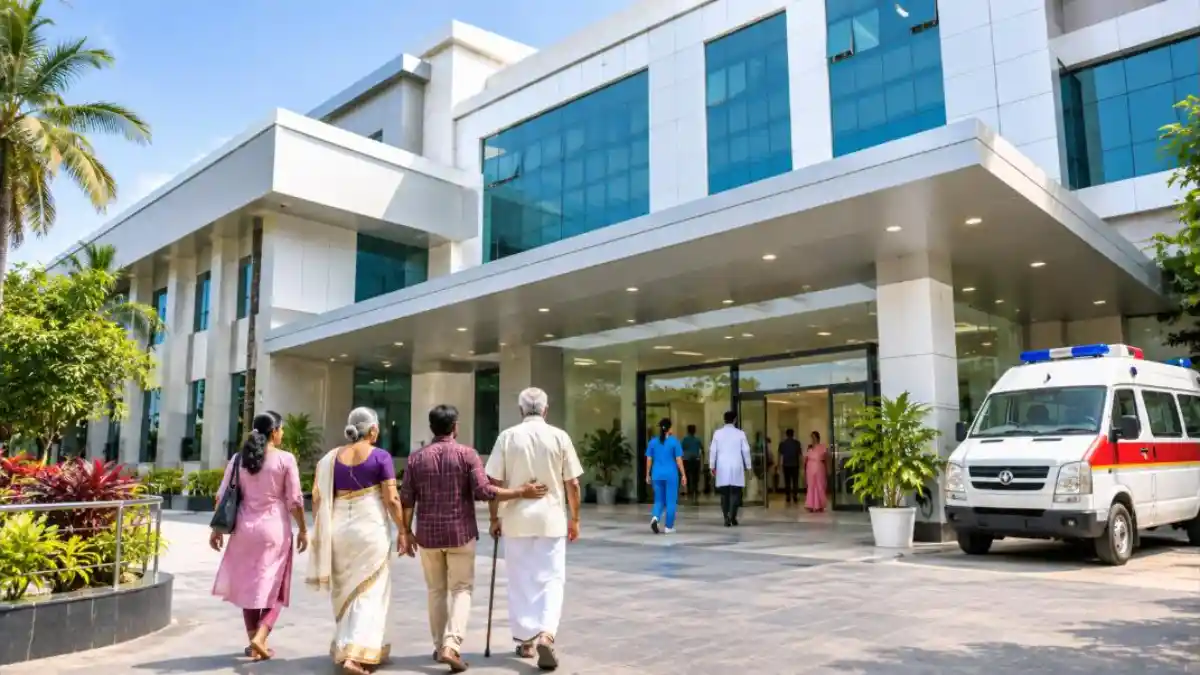
- Find an empanelled hospital using the hospital search on the official PM-JAY website or the Ayushman app.
- At admission, go to the Ayushman Mitra desk with the card (printed or on phone) and Aadhaar.
- The hospital verifies identity through Aadhaar and raises a pre-authorisation request.
- Once approved, treatment is cashless up to the available balance in the card.
- At discharge, you should not be asked to pay for covered services. Keep the discharge summary.
If any hospital asks for money for a covered package, you can complain to the national helpline 14555 or through the grievance portal.
Common Problems and Fixes
| Problem | Fix |
|---|---|
| App says not eligible | Check DOB on Aadhaar; age must be 70+ as per Aadhaar |
| OTP not coming | Use the Aadhaar linked number; update it if old |
| Photo rejected | Retake in good light, plain background |
| Card pending approval | Wait a few days and check the app again |
| CGHS holder confusion | Choose either CGHS or AB PM-JAY; both cannot be used together |
| Hospital not accepting | Confirm the hospital is empanelled and the package is covered |
Tips for Children Applying for Parents
Many sons and daughters apply for the Ayushman Vay Vandana Card on behalf of parents who live in another town. You can log in to the app with your own mobile number and enrol parents using their Aadhaar OTP. Ask your parents to read out the OTP on a call. Once the card is ready, download it and send it to them on WhatsApp, and keep a copy yourself for emergencies.
It also helps to write down the nearest empanelled hospitals in your parents’ area. In an emergency, you will know where the card can be used without wasting time.
Who Benefits Most from the Ayushman Vay Vandana Card?
Every senior above 70 should get the card, but some groups gain the most. Seniors without any health insurance are the biggest winners, because private policies at this age are very expensive or not available at all. Retired people from the private sector who never had employer cover also benefit. Families who already have a regular Ayushman card get extra protection, since the 70+ member gets a separate top-up and no longer uses up the family’s shared limit.
Even seniors who have private health insurance can use the Ayushman Vay Vandana Card as a second layer of protection. Many private policies have room-rent limits, co-payment for senior citizens or waiting periods for certain diseases. The government card can help when the policy limit is exhausted, subject to hospital and package rules.
Ayushman Vay Vandana Card for CGHS and ECHS Members
Retired central government employees under CGHS, ex-servicemen under ECHS and CAPF personnel have a choice. They can continue with their existing scheme or opt for AB PM-JAY through the Ayushman Vay Vandana Card, but not both at the same time. Before switching, compare the hospital networks in your city, the OPD benefits of CGHS or ECHS, and the convenience of cashless treatment under each scheme. For most CGHS members in big cities, the existing scheme’s OPD and medicine benefits are an important factor.
Kerala Seniors: What You Should Know
In Kerala, AB PM-JAY is implemented along with the state’s Karunya Arogya Suraksha Padhathi (KASP). Many seniors already have a KASP card through their family. The Ayushman Vay Vandana Card adds a separate cover for 70+ members. Enrolment help is available at government hospitals and at many empanelled private hospitals through the Ayushman Mitra or KASP help desk. Akshaya centres can also guide families.
State government employees and pensioners in Kerala are covered by MEDISEP. Read our MEDISEP 2026 guide to understand how it works and plan the right combination of cover for your parents.
How to Check Ayushman Vay Vandana Card Status
After applying, log in to the Ayushman app or the beneficiary portal with your mobile number. Search by the senior’s Aadhaar. The status shows as approved, pending or rejected. If approved, the download button appears. If rejected, the reason is usually a mismatch in Aadhaar details or a photo issue, and you can apply again after fixing it.
If the status stays pending for many days, contact the helpline 14555 or visit the nearest empanelled hospital’s Ayushman Mitra with the senior’s Aadhaar.
Safety Tips: Avoid Fake Ayushman Websites and Calls
- The Ayushman Vay Vandana Card is completely free. Never pay anyone for registration.
- Use only the official Ayushman app from the National Health Authority and the official government websites.
- Do not share Aadhaar OTP with unknown callers who say they will “activate” the card.
- Ignore WhatsApp forwards with links promising cash or special benefits for seniors.
- If a hospital or agent demands money for a covered package, report it on 14555.
Checklist to Get the Card Today
- Senior’s Aadhaar card with correct date of birth
- Aadhaar linked mobile working for OTP
- Android phone with the official Ayushman app, or a hospital help desk visit
- Good light for the live photo
- Download and save the card as PDF and print
- Note nearby empanelled hospitals
Real-Life Examples
Example 1: Retired couple without insurance
Gopalan, 74, and his wife Sarojini, 71, retired from a small private business and never had health insurance. Their son enrolled both of them through the app using their Aadhaar OTPs. The ₹5 lakh yearly cover is shared between the two of them. When Gopalan later needed a cataract surgery at an empanelled hospital, the Ayushman Mitra raised the pre-authorisation and the surgery was done cashless.
Example 2: Joint family already under AB PM-JAY
A family of six in a village already had a regular Ayushman card. The grandmother, aged 78, enrolled for the 70+ card. She now has her own top-up cover, so if she needs hospital treatment, the family’s original ₹5 lakh remains available for the younger members.
Example 3: Senior with a private policy
Thomas, 72, has a private health policy with a co-payment clause for seniors. He enrolled for the government card too. He keeps both cards with him and asks the hospital which option suits a particular treatment, depending on whether the hospital is empanelled and the procedure is covered.
Planning Health Care for Seniors
A government health card is a strong base, but good planning makes it work better. Keep a small file at home with the senior’s Aadhaar copy, the printed card, a list of regular medicines, past discharge summaries and the phone numbers of two nearby empanelled hospitals. Share this file with a neighbour or relative who lives close by. In an emergency, anyone can then take the senior to the right hospital with the right papers. Also remember that outpatient visits and medicines are not usually part of the cover, so set aside a small monthly budget for them, or use government outpatient services and Jan Aushadhi stores to reduce costs.
Important Points to Remember
- Age is taken from Aadhaar; correct it before applying if it is wrong.
- The cover renews every year; unused balance does not carry forward.
- Treatment must be at an empanelled hospital for cashless benefit.
- Always carry Aadhaar along with the card at admission.
- Keep discharge papers and bills for your records.
Frequently Asked Questions
Who can get the Ayushman Vay Vandana Card?
All Indian citizens aged 70 years and above, as per Aadhaar, can get the card. There is no income limit.
Is the Ayushman Vay Vandana Card free?
Yes, registration and the card are free. Treatment for covered packages at empanelled hospitals is cashless up to the available limit.
How much cover does the card give?
It gives up to ₹5 lakh a year on a family basis for seniors aged 70+. If the family is already under AB PM-JAY, the senior gets an extra top-up of up to ₹5 lakh for themselves.
Can I use it if I have private health insurance?
Yes. Seniors with private health insurance or ESI can also enrol and use the Ayushman Vay Vandana Card.
What documents are needed?
Only the Aadhaar card is needed, with eKYC done through OTP, fingerprint or face authentication.
Can CGHS pensioners apply?
Yes, but they must choose either CGHS or AB PM-JAY. They cannot use both together.
Can I apply without a smartphone?
Yes. Visit any empanelled hospital’s Ayushman Mitra help desk or a nearby service centre with the senior’s Aadhaar.
Conclusion
The Ayushman Vay Vandana Card is a simple, free and powerful safety net for every senior aged 70 and above. With just Aadhaar and a few minutes on the Ayushman app, you can secure up to ₹5 lakh of hospital cover each year for your parents or grandparents. Apply today, download the card, keep a printed copy, and note the nearest empanelled hospitals. For official information, visit the PM-JAY official website or the NHA beneficiary portal.


